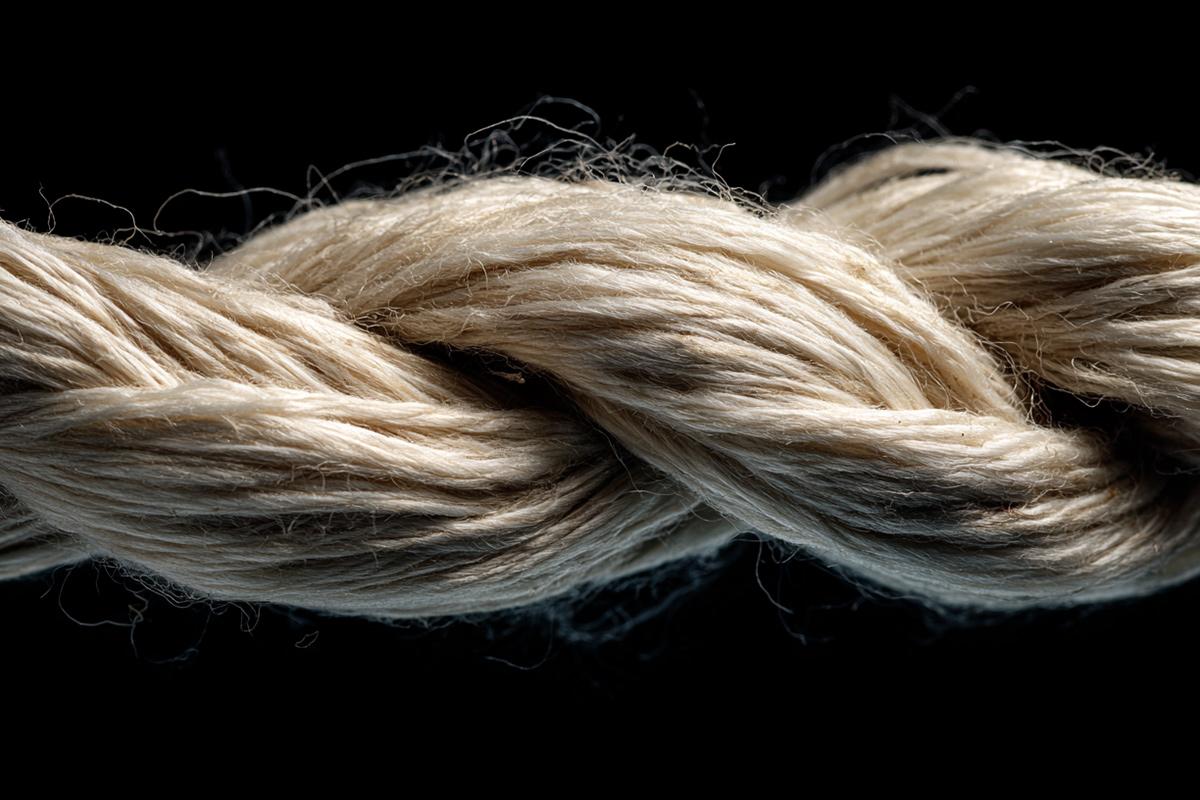
What's actually in the cotton
Most brands that claim sustainable cotton leave it at that. A badge. A word. No explanation. The reality of how cotton is grown, certified, and graded is genuinely complicated — and worth understanding if you're paying for something that's supposed to last.
There are several cotton sourcing standards in use across the industry. They have different rules, different trade-offs, and different effects on the fiber quality that eventually becomes the garment you wear. Here's what they actually mean.
Better Cotton (BCI)
Better Cotton Initiative is the most widely used sustainable cotton standard — it accounts for roughly 20% of global cotton production, grown across 26 countries. It's not organic. It allows pesticides and herbicides but trains farmers to reduce their use, introduces water stewardship practices, and prohibits forced labor and modern slavery on certified farms. Its auditing system is independently evaluated against a globally recognized framework for credible sustainability standards.
BCI is built around a scale-up model — farms commit to continuous improvement rather than a binary pass/fail. It's inclusive rather than exclusive, which means it operates alongside other farming methods rather than replacing them entirely. That's both its strength and its limitation: more cotton qualifies, which is better for the supply chain, but the standard isn't as strict as organic.
Organic cotton
Organic cotton prohibits herbicides and pesticides entirely. It's held to strict environmental standards, independently audited by GOTS-accredited certification bodies. No forced labor. No GM seeds.
What the organic label doesn't tell you: organic cotton accounts for less than 1% of global cotton production. There is more demand for it — and more claims about it — than there is actual organic cotton available. More importantly, organic does not mean higher quality. The fiber grade varies as much within organic cotton as it does anywhere else. And organic cotton does not necessarily use less water — it's often grown in rain-fed regions, which sounds good, but doesn't automatically mean lower environmental impact than well-managed irrigated farming.
The idea that organic cotton uses 91% less water — a figure that circulates widely — is not accurate. Sustainable farming is more complicated than a single stat.
Australian cotton
Australian cotton is a smaller category — roughly 3-5% of global production — but it's worth understanding separately. It uses GM seeds developed with pest resistance built in, which reduces the need for spraying. It has its own farming standard (myBMP) covering water management, soil health, energy efficiency, labor conditions, and ecology. Australian farms produce high-yield, tall-staple cotton — some of the purest available due to low moisture and oil contamination during picking. 43% of the Australian cotton workforce are women. No forced labor on certified farms.
It's a category that tends to get overlooked because it doesn't fit neatly into the organic vs. conventional framing most sustainability conversations use. The reality is more nuanced: high-standard farming with GM seeds can produce better, more consistent fiber than organic farming with lower-grade output.
Why this matters for what you wear
The cotton sourcing standard affects the final fiber grade. Fiber grade affects the yarn. Yarn affects how the fabric feels, how it pills, how it holds its weight across washes. A premium blank made from high-grade cotton — regardless of whether that cotton is BCI, Australian, or organic — will outperform a cheap blank made from low-grade organic cotton every time.
The blanks we source use a mix of BCI and Australian cotton. We chose suppliers who make the sourcing decisions that prioritize fiber quality and ethical farming practices together — not just the badge that markets most cleanly.
What you're wearing is the result of that. Not a marketing claim. An actual supply chain decision.