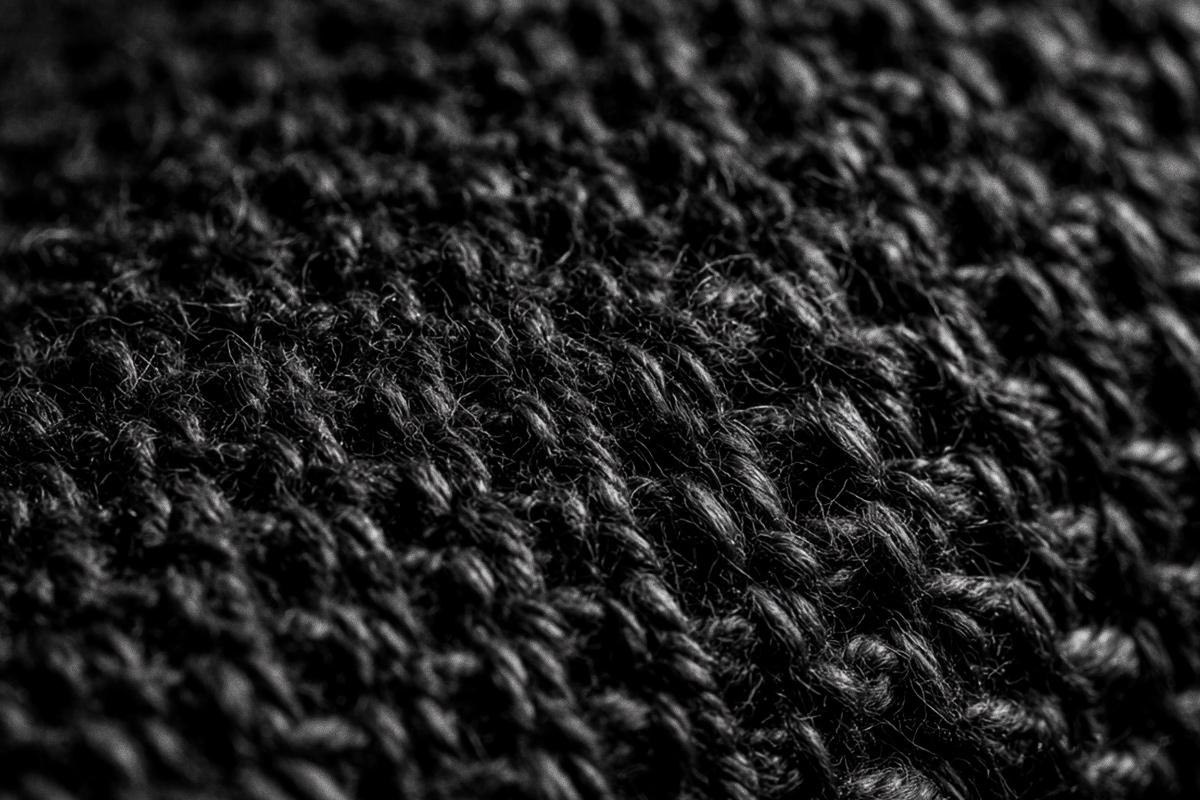
How garment construction affects how long something lasts
Two garments can use identical fabric and still have completely different lifespans. The difference is in the construction — seams, stitching, finishing. These details are invisible at the point of purchase and obvious after two years of wear.
Most people evaluate a garment by its fabric. The weight, the softness, the way it drapes. Those things matter. But the garment's longevity is determined as much by how it's put together as by what it's made of. A premium fabric poorly constructed fails faster than you'd expect. A standard fabric well constructed outlasts the trend.
Seam construction
A seam is where two pieces of fabric are joined. The simplest seam is a single line of stitching — fast to produce, weak under stress. When you pull a garment on and off, when you stretch it at the shoulders or the sides, that single-stitch seam is taking the load. Over time it frays, weakens, and eventually separates.
Premium construction uses overlock seaming — a stitch that wraps around the raw fabric edge as it joins the panels. This prevents fraying at the seam edge and distributes stress across multiple threads. Side seams on quality garments are often double-stitched: one structural seam plus one finishing seam, creating a reinforced join that holds even under repeated stress.
The difference between a $15 tee and a $60 tee is often visible in the seams. Turn them inside out. The cheap one has raw, single-stitched edges. The quality one has clean, finished, reinforced joins.
Stitching density
Stitches per inch matters. More stitches per inch means a tighter join, less movement between stitches under stress, and a cleaner finish. Fast production runs at lower stitch density — it's quicker and uses less thread. Slower, more deliberate production runs higher density. You can feel the difference in the hem of a quality garment — it lies flat, doesn't stretch unevenly, doesn't ripple at the fold.
Finishing details
Finishing is everything that happens after the structural stitching — the cuffs, the hem, the neckline, the collar rib. These are the points of highest repeated stress on any garment. Every time you pull a hoodie over your head, the neckline takes a load. Every time you wash it, the cuffs flex and recover. Cheap finishing at these points — thin rib, low-elasticity material, single-stitched attachment — is where garments fail first.
Quality finishing uses heavier rib material at stress points, double-needle hemming at the base, and reinforced attachment at collar and cuff joins. These details add cost and production time. They also add years to the garment's useful life.
Why this compounds with fabric quality
Premium fabric with cheap construction is a waste of the fabric. The seams fail before the material does. Cheap fabric with quality construction is a better deal — the construction holds, but the material degrades.
What lasts is premium fabric and quality construction together. Each one extends the value of the other. The fabric holds its hand feel. The seams hold their structure. The finishing holds its shape. The garment ages well instead of failing fast.
A garment that ages well instead of failing fast is the result of every decision along the way being made for longevity, not for speed. That's the only standard worth building to.